It's a long time since I've done one of these blog things, let see if I remember how.
I participate in a group called "London Calling Photographers" or LCP for short. Nice group of people but there was much about it that was beginning to grate.
A long time ago, Jean Loup Sieff, one of the great photographers, expressed his disdain for camera club people as, and I'm paraphrasing somewhat, people in tweed jackets with patches on their elbows comparing the sizes of their dicks. I might have misremembered the dick part. The rush to acquire the new shiny in the form of the Canon 5D MkII was beginning to affirm his view of these kinds of groups to me.
More irritation came in the format of the "critique" portion of the evening where amateur photographs were ripped to shreds by people who may or may not have been able to do better in the same circumstance. Reportage and street photos suffered this the most to my mind where very often that moment is the only moment with no chance for re-exposure or re-composition. OK, there's a skill to getting that one shot good, but hell, that's why we take pictures.
Anyhow, last night was going to be my last night attending except I got a major kick up the arse.
Eamon, aka spiduko instead of shredding some poor sap's efforts challenged us. Oh, Eamon is a "fillum" (he's Irish you know) freak which usually also rubs me up the wrong way.
Firstly, he showed us some apparent snaps in lovely saturated film colour. They were moments in time with little thought to the composition. However, they were both part of a journey by the respective photographers and in context become part of a body of art.
So we were challenged. Were our efforts consistent with creating a corpus of work we would like to leave as a legacy or are we just snappers? Was our work authentic? Or were we just taking pictures we like?
This was a timely challenge for me. I'd recently come to the conclusion I could tear up (ok, erase) all but maybe 5 pieces I've ever taken, travel and friend shots notwithstanding. That would be about 30,000 pictures gone with few tears. I never go back to these images anyhow. What they are however, is part of my journey. All those pub portraits, landscapes and music pictures are part of learning the craft, the settings, embedding them in my psyche so that when it comes to composing some art, they are second nature. I'm happy at least that they've been stopoffs on the road.
Whilst I'm not a total comment whore on flickr, I do appreciate positive and constructive feedback and now I'm actually teaching photography to people who have made a conscious decision to try to take better pictures, I appreciate the nature of the journey these folks are taking.
So, if you class yourself as a photographer, are you creating something that's unique and part of you? Or are you just taking a bunch of snaps?
Thursday, April 30, 2009


Sunday, March 29, 2009
Eggs Benedict, House Special Omelette at LAX
 On the surface, this may appear to be just another food blog but it isn't. Honest Guv. It's about the power of the internet, obviously.
So, we'd got in to LAX the night before, googled using the Radisson's free internet for a nearby sushi place, found one that was well-reviewed and had some nice rolls before crashing at a sensible hour. Next morning, I had the hankering for a proper diner breakfast in the vicinity of the hotel. A quick search for "LAX breakfast" turned up a shortlist and after a quick peruse of the reviews we settled on KJ's Diner. And what a great choice it was too! Somewhat hidden away at the end of a block, we were greeted seated quickly and armed with coffee. We ordered the eggies and the omeletties and mighty fine they were too. The pancakes were something else, so light and fluffy. The coffee was constantly topped up.
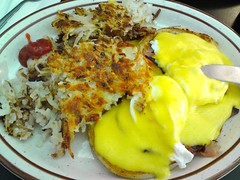
This set me thinking about the internet. There would have been no way we'd have found this place without it. And had there been no decent reviews we certainly wouldn't have gone. Maybe now, "location! location! location!" is about internet location. Being found and then having good reviews corresponds to location. With satnav, physical location, the act of being stumbled upon, is much less relevant than it used to be. Overall, I think this bodes well. Places will get away less often with being rubbish and places that deserve to do well will do so with the power of "word of internet". We're going back on the way home for menudo, apparently. Well, she will. Chinese crispy tripe was adventurous enough for me, thank you.
Saturday, March 14, 2009
BBC created botnet from pwned PC's
From the Register. Clicky thingy it to read:
BBC zombie caper slammed by security pros
This is a really interesting one. A few points:
1. Clearance for this programme went all the way up. It was cleared by the lawyers and compliance.
2. Journalists, unlike Gary McKinnon, can hide behind "public interest". If it's an investigation that can be shown to be of benefit to the great unwashed, they're probably in the clear.
And the big ones for me:
3. Mircrosoft are SO culpable in this whole sorry mess. There is no reason to use such broken, compromised software. They broke NT to lever Windows on it and it's been broken ever since. Class action time. Anyone who has suffered a loss through Windows brokenness should sue.
4. Why isn't there an agency in the country allowed, no, mandated, to do what the BBC did? If a PC is compromised, then pwn it, disable it and load up a screensaver telling people to get it to a techie to get it cleaned. We're letting drunk, stoned drivers loose on the information superhighway.
More Linux and more Macs.
BBC zombie caper slammed by security pros
This is a really interesting one. A few points:
1. Clearance for this programme went all the way up. It was cleared by the lawyers and compliance.
2. Journalists, unlike Gary McKinnon, can hide behind "public interest". If it's an investigation that can be shown to be of benefit to the great unwashed, they're probably in the clear.
And the big ones for me:
3. Mircrosoft are SO culpable in this whole sorry mess. There is no reason to use such broken, compromised software. They broke NT to lever Windows on it and it's been broken ever since. Class action time. Anyone who has suffered a loss through Windows brokenness should sue.
4. Why isn't there an agency in the country allowed, no, mandated, to do what the BBC did? If a PC is compromised, then pwn it, disable it and load up a screensaver telling people to get it to a techie to get it cleaned. We're letting drunk, stoned drivers loose on the information superhighway.
More Linux and more Macs.
Tuesday, March 03, 2009

Sunday, March 01, 2009
Whither the BBC
The BBC has an interesting problem.
As a "corporation", it is bound by its charter to perform certain functions ranging from providing a certain proportion of religious programming at one end of the spectrum through to creating a certain kind of ratings-chasing rubbish. In between it is expected to inform, enlightenment and entertain.
The flip side of this is our expectations of the BBC as part of the British public. We all have a soft spot for Auntie. The slightly patrician, worthy, wholesome aura that the BBC used to be known for is as comforting as toast and Marmite for breakfast. We want the BBC to take a stand, to be a moral authority. The recent kerfuffle about the DEC Gaza appeal is a case in point. Be assured, that most people in the BBC would have wanted to broadcast such an important humanitarian appeal. However, such a broadcast has to be measured against the charter and as such exercised minds both legal and editorial. In the end, the risk of breaching the charter was judged too high a price to pay.
The problem is that our tenner a month towards the maintenance of what is fundamentally a great institution has been hobbled by successive governments of various shades. The BBC is now unable to take a lead, to take significant risks.
There are thousands of very talented people trying their very best to produce programmes and other content that engage and inform, that make sixty years of historic programming accessible. After all, you, your parents and grandparents paid for it. These talented people are trying to do what they can within bounds set, creating new channels for their content and engaging with the audience.
I'm sure that casting the BBC adrift as a commercial entity is the wrong thing. Look at Sky. Certainly, the quest for value for money is a good one, but not all expenditure necessarily has an immediate payback. How do we know what of what we produce today will be of value in another fifty years time? How do we know what BBC pure research and development will be in our pockets in a few years time?
I'm not entirely sure I'm making a great point here. I love the BBC, I was practically raised by it and have huge respect for its achievements. What I want from it I guess, is just a little more boldness; not to be constrained by fear of offending the authorities.
Is that practical?
As a "corporation", it is bound by its charter to perform certain functions ranging from providing a certain proportion of religious programming at one end of the spectrum through to creating a certain kind of ratings-chasing rubbish. In between it is expected to inform, enlightenment and entertain.
The flip side of this is our expectations of the BBC as part of the British public. We all have a soft spot for Auntie. The slightly patrician, worthy, wholesome aura that the BBC used to be known for is as comforting as toast and Marmite for breakfast. We want the BBC to take a stand, to be a moral authority. The recent kerfuffle about the DEC Gaza appeal is a case in point. Be assured, that most people in the BBC would have wanted to broadcast such an important humanitarian appeal. However, such a broadcast has to be measured against the charter and as such exercised minds both legal and editorial. In the end, the risk of breaching the charter was judged too high a price to pay.
The problem is that our tenner a month towards the maintenance of what is fundamentally a great institution has been hobbled by successive governments of various shades. The BBC is now unable to take a lead, to take significant risks.
There are thousands of very talented people trying their very best to produce programmes and other content that engage and inform, that make sixty years of historic programming accessible. After all, you, your parents and grandparents paid for it. These talented people are trying to do what they can within bounds set, creating new channels for their content and engaging with the audience.
I'm sure that casting the BBC adrift as a commercial entity is the wrong thing. Look at Sky. Certainly, the quest for value for money is a good one, but not all expenditure necessarily has an immediate payback. How do we know what of what we produce today will be of value in another fifty years time? How do we know what BBC pure research and development will be in our pockets in a few years time?
I'm not entirely sure I'm making a great point here. I love the BBC, I was practically raised by it and have huge respect for its achievements. What I want from it I guess, is just a little more boldness; not to be constrained by fear of offending the authorities.
Is that practical?
Sunday, February 15, 2009
Wednesday, January 28, 2009
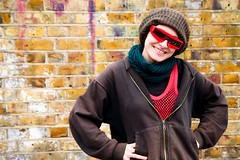
Class
First time out with the lights. Aside from noticing my cheap zoom was soft at 200mm, the other thing was how hard it is to get the catchlights in the eye.
More here:
www.davehodgkinson.com/gallery/20090127_class/

More here:
www.davehodgkinson.com/gallery/20090127_class/
Monday, January 26, 2009

Friday, January 23, 2009
A night of girl rock at the Water Rats
I saw the last 3 of 5 fine girls (ish) bands. Well worth keeping any eye on for different reasons:
First up, Cherry Brakewells:
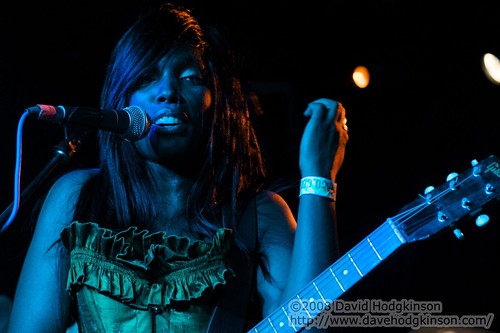
Then Rubicks:
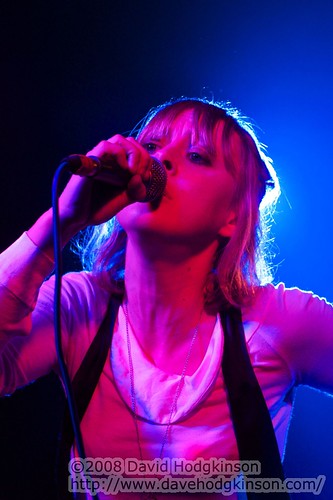
And finally, Sush:
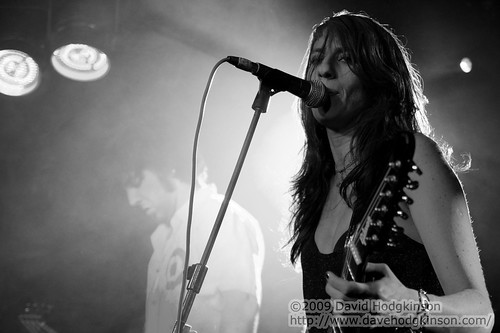
Good times!Dea
First up, Cherry Brakewells:
Then Rubicks:
And finally, Sush:
Good times!Dea
Saturday, December 27, 2008
Friday, December 26, 2008
Thursday, December 25, 2008
Wednesday, December 24, 2008
The best laid plans come apart at the seams...
...shatter my dreams.
There are some phrases destined to make the heart skip a beat and one of them is "well, why don't you come to my father's chateau in Nice for New Year's?".
Sadly, flights are stupidly expensive (crisis? what crisis?) and points taking half a day via insane places.
Next time...
There are some phrases destined to make the heart skip a beat and one of them is "well, why don't you come to my father's chateau in Nice for New Year's?".
Sadly, flights are stupidly expensive (crisis? what crisis?) and points taking half a day via insane places.
Next time...
The Perl Foundation Migrates the Perl 5 Development Repository to the Git Version Control System
In an unusual burst of tuits I put the press release on PRWeb. It'll be interesting to see the pickup rate.
Good practice for when the perl6 release goes out :)
Good practice for when the perl6 release goes out :)
Sunday, December 21, 2008
Dinner.
We excelled ourselves tonight. Barbecued ribs (48hour marinade), má pó tofu, kai lam with last night's sesame, soy and vinegar dip. Oh, and fluffy rice from the £9.50 rice cooker from Argos.
Yummy.

Yummy.
Friday, December 19, 2008
Monday, December 15, 2008
Tuesday, December 09, 2008
Sunday, December 07, 2008
Canon 5D MkII test day
It came as a bit of a surprise when, as a mildly bigoted Nikonian, I was asked along with a few other photo bloggers to spend the day with the shiny new Canon 5D MkII last week. What follows is a mostly objective review with a few comparisons to my D300 and current baby, the Tamron 17-50 f/2.8.
I'd put the word out I'd be doing this test and got back various requests, mostly amounting to:
Our professional guide was the reknowned if not quite yet legendary photo-journalist Edmond Terakopian, famed not least for his shots of some of the victims of 7/7.
We assembled at Canon's shiny offices on the edges of the City, introduced ourselves and got a first play.
My first impressions:
We were bombarded with various factoids, some of which even made sense to me:
So off we went on out walkabout. We started at the British museum, then as dusk fell, moved to around the London eye and then back over the river to Trafalgar Square.
I've dumped some pics here in full resolution so you can zoom right in and check the noise and overall quality.
There seem to be slight chromatic aberrations in sudden light-to-dark transitions however, this is much more likely to be to do with jpeg artifacts than the kit.
Overall, it's an impressive piece of kit. The menu system is slightly better organised that the Nikon's and there are some great
features. The low-light performance is excellent, but as with the D300 sometimes needs some persuasion not to try to capture daylight levels of light from a night scene.
Would I trade that combination for my D300? Well of course. It costs two and a half times as much. Is it worth that premium? Not convinced. It's a serious piece of top-end amateur kit though and if you have the money and will make use of the features, then go for it.
I'd put the word out I'd be doing this test and got back various requests, mostly amounting to:
- What's it like in low light?
- How fast and accurate is the focusing?
Our professional guide was the reknowned if not quite yet legendary photo-journalist Edmond Terakopian, famed not least for his shots of some of the victims of 7/7.
We assembled at Canon's shiny offices on the edges of the City, introduced ourselves and got a first play.
My first impressions:
- It's heavy! Or at least the configuration they gave us was heavy. It had the Canon 28-70mm f/2.8 which was probably half the weight of the whole kit. I found my wrists aching after a couple of hours, much like my wrists ached after shooting my first couple of gigs with a D70 and the kit lens!
- The basic grip is good. There are sculpted grooves for the thumb and middle finger to rest in. On a simple ergonomic level, the Canon wins. Just don't go quoting the "Canon wins" out of context.
- At f/2.8, apprently given the full-frame sensor, depth-of-field effects are enhanced. My pic of the Evian bottles at f/3.2 shows this!
- I really, really missed the two wheels under the thumb and forefinger. Being able to futz with both aperture and shutter speed independently is a big win for me.
- I also immediately missed having the focus/exposure point rocker under my thumb. It's something I use a *lot* when shooting to expose exactly on what I want and not let the camera try to do what it thinks. It turns out that the little joystick by the LCD could be repurposed to do that. Shame it doesn't out of the box though.
- The LCD was dull compared to the D300. Then I found the brightness option and all was well. What effect that would have on battery drain, I have no idea.
We were bombarded with various factoids, some of which even made sense to me:
- Despite being a "MkII", it's a complete overhaul of the original 5D: the sensor is new and lower-powered, the on-board CPU is newer, being faster and les power-hungry. Certainly after a day of shooting and chimping around 250 pictures, the battery was still full according to the LCD.
- It's a full-frame sensor with 21 Mega-pixels. This is a Good Thing apparently, although I can imagine disk manufacturers rubbing their hands together with glee. A straw-poll showed the participants had between 2TB and 10TB of disk. Each. And various issues with offsite backup. Business opportunity there methinks.
- The RAW drivers weren't out yet so we'd be shooting jpeg.
- There is vignetting correction on board that knows about a selection of lenses. This raises the question about whether to
trust a poky little on-board CPU with doing stuff, like making colour temperature decisions and compressing to jpeg, or let your mighty dual-core computer do it. This is a pub discusion. However, something like lens-correction done on the camera is certainly convenient and obeys the "don't make me think" principle. - The HD video was trumpeted as a major feature. I deliberately ignored it. A major regret now but it's something I'm definitely going to play with on the D300, not sure if that's HD though! As a photo journalist, Edmond was very excited about it and I'm sure his notes of the day will have more on this. It's a major shift in thinking about shooting and one I didn't really want to have to deal with on the day.
So off we went on out walkabout. We started at the British museum, then as dusk fell, moved to around the London eye and then back over the river to Trafalgar Square.
I've dumped some pics here in full resolution so you can zoom right in and check the noise and overall quality.
There seem to be slight chromatic aberrations in sudden light-to-dark transitions however, this is much more likely to be to do with jpeg artifacts than the kit.
Overall, it's an impressive piece of kit. The menu system is slightly better organised that the Nikon's and there are some great
features. The low-light performance is excellent, but as with the D300 sometimes needs some persuasion not to try to capture daylight levels of light from a night scene.
Would I trade that combination for my D300? Well of course. It costs two and a half times as much. Is it worth that premium? Not convinced. It's a serious piece of top-end amateur kit though and if you have the money and will make use of the features, then go for it.
Friday, December 05, 2008

Subscribe to:
Posts (Atom)

 Posts
Posts


